Digital vs Printed Manuals.
When I first started sourcing and selling manuals many years ago. There was very few digital manuals available, but as with mobile phones the world has progressed.
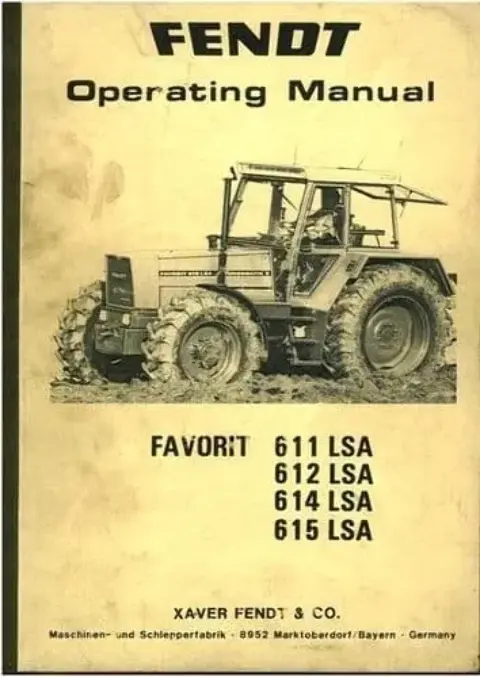
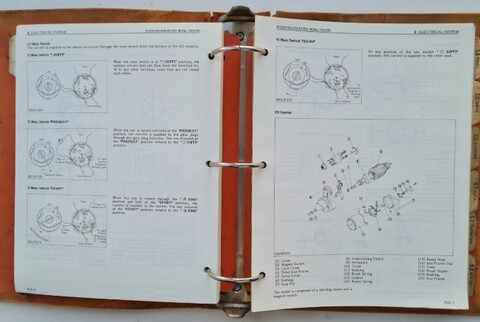
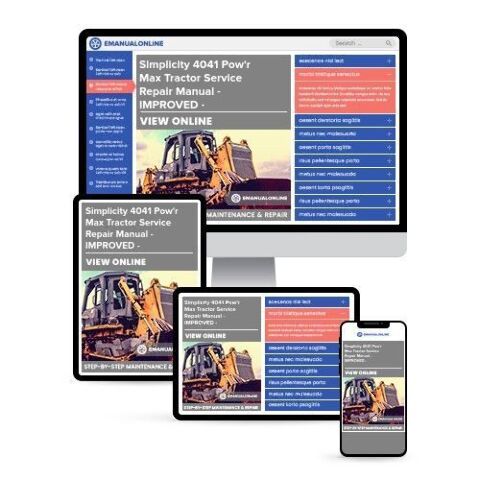
Choosing between a digital or printed tractor workshop manual depends largely on your working environment and how you like to handle information. In a greasy workshop, a tablet can be a liability, but in a field at night, a searchable PDF is a lifesaver.
Here is a comparison to help you decide which format fits your repair style.
At a Glance: The Comparison
| Feature | Digital (PDF / Online) | Printed (Physical Book) |
| Searchability | Instant. Use "Ctrl+F" to find torque specs or part numbers. | Manual. Requires flipping through the index. |
| Durability | Immortal. If you lose the device, you still have the file. | Vulnerable. Oil, water, and torn pages are common. |
| Usability | Requires a device (phone/tablet/laptop) and battery. | Works anywhere, anytime, with no power needed. |
| Updates | Automatic. Manufacturers often push the latest revisions. | Static. Once printed, it is technically out of date. |
| Cost | Generally 30–50% cheaper; no shipping fees. | Expensive due to weight, printing, and shipping. |
| Extras | Often includes video links and interactive diagrams. | Limited to text and static images. |
The Digital Advantage
-
Search & Zoom: You can zoom in on complex wiring diagrams or hydraulic schematics that might be tiny and blurry in a printed book.
-
Instant Access: You can download it the moment you break down, rather than waiting days for a package to arrive.1
-
Space-Saving: You can store manuals for ten different machines (tractor, baler, plow) on one single smartphone.
-
Sacrificial Printing: You can print out just the 3 pages you need for today's job. If they get covered in grease, you just throw them away when finished.
The Printed Advantage
-
Grease Friendly: You can flip through a paper manual with oily fingers. Touching a touchscreen with grease usually leads to a messy screen or unresponsive controls.
-
No Battery Anxiety: There is no "auto-sleep" or "low battery" warning when you are in the middle of a complex timing gear setup.
-
Better Context: Many mechanics find it easier to keep their place in a physical book, using a finger to hold one page while looking at a diagram on another.
-
Resale Value: A clean, original workshop manual can actually add value to a vintage tractor if you ever decide to sell the machine.
The Pro-Tip: The "Hybrid" Method
Most modern tractor owners prefer a hybrid approach:
-
Buy the Digital Version: It’s cheaper and gives you the high-res diagrams.
-
Print the Specific Section: When it's time to actually work on the engine, print the relevant 10–20 pages and put them in a cheap plastic sleeve or binder.
-
Keep the Tablet Nearby: Use the tablet for "Deep Zoom" on diagrams or to watch a YouTube video of the same repair, but keep the paper as your primary guide.